
HIFU Before and After: Results Timeline and What May Change
HIFU before and after changes are usually assessed over weeks and months rather than immediately after treatment. Depending on the concern, a suitable result may involve firmer-looking skin or a modest change around the lower face, jawline, chin, brow or neck. The degree of change varies, and HIFU does not produce the same outcome as surgery.
HIFU stands for high-intensity focused ultrasound. It uses focused ultrasound energy in selected areas of the skin and underlying tissue. The treatment may be considered for selected concerns involving mild to moderate skin laxity, but visible outcomes depend on skin quality, facial structure, tissue position, treatment planning and the underlying cause of the concern.
What HIFU Results Can You Realistically Expect?
Realistic HIFU results are usually subtle and depend on the treatment area, baseline laxity and individual response.
- Firmer-looking skin: HIFU may support a firmer appearance where mild to moderate laxity is present.
- A more defined lower face: When laxity softens the lower-face contour, the treated area may appear slightly firmer over time.
- A clearer jawline-to-neck transition: Some people may notice better definition between the jawline and neck when laxity contributes to the concern.
- A firmer under-chin profile: The skin beneath the chin may look less loose in suitable cases. This does not mean HIFU reduces under-chin fat in everyone.
- Subtle brow or upper-eye changes: Some people may notice slightly firmer skin or a modest change in brow position.
The most relevant HIFU treatment results are usually seen when HIFU is matched to the right concern. Results may be limited when significant excess skin, marked volume loss or structural changes are the main issue.
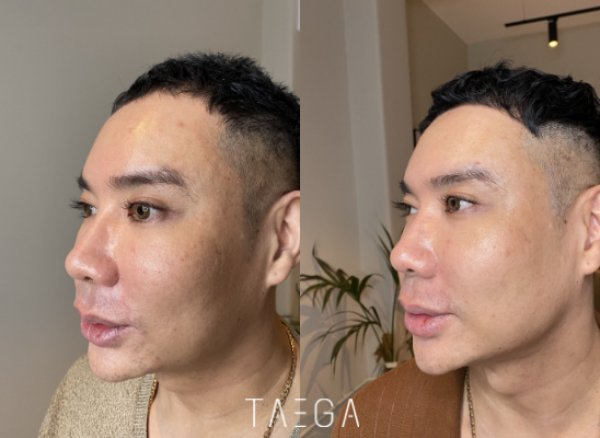
HIFU may improve skin firmness and jawline definition
When Do Changes Start to Develop?
A HIFU result is usually assessed over months rather than on the day of treatment. Some people may notice temporary tightness, warmth or tenderness shortly afterwards, but these early effects are not the final outcome. Any later change in skin firmness or contour may become easier to recognise as the treated area settles over time.
| Time after treatment | What may be noticed |
| Immediately after treatment | Temporary warmth, redness, tenderness, mild swelling or a feeling of tightness may occur. |
| Weeks 2–4 | The area may begin to settle, and some people may notice an early change in skin firmness. |
| Months 2–3 | Changes in lower-face firmness, jawline definition or neck contour may become easier to recognise. |
| Months 3–6 | Changes may continue to develop, depending on the person, treatment area and treatment plan. |
| Longer term | The duration of visible change can vary with skin ageing, baseline laxity, lifestyle and individual response. |
Temporary tightness immediately after treatment should not be interpreted as the final result. Planned follow-up appointments and standardised photographs can provide a more useful comparison as the treated area settles.
HIFU Before and After by Treatment Area
Changes after HIFU vary according to the treatment area and the underlying cause of the concern. The examples below describe what may be visible when mild skin laxity is a relevant factor.
Jawline and jowls
HIFU may make the jawline appear slightly clearer and early jowls look less softened when mild laxity contributes to a loss of definition between the lower face and neck. An HIFU before and after jawline or HIFU before and after jowls comparison may show a smoother transition across this area.
The aim is not to reshape the face or create an artificially sharp jawline. Results may be more limited when facial volume, tissue heaviness or natural facial anatomy are the main causes of the softened contour.
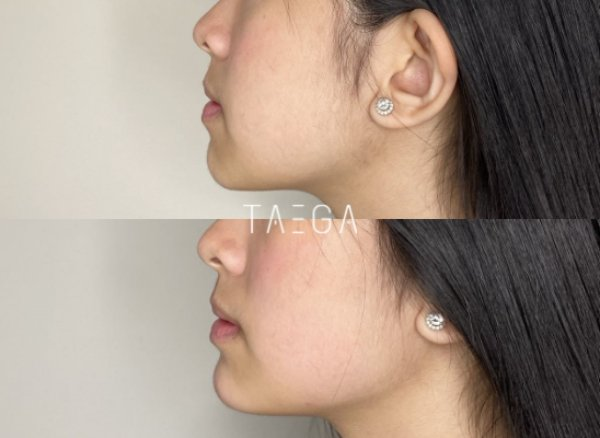
HIFU before and after jowls comparison at follow-up
Chin and under-chin profile
HIFU may make the skin beneath the chin appear firmer when mild laxity contributes to a softer chin profile. In selected cases, the transition between the chin and neck may also look less softened after the result develops.
However, under-chin concerns are not always caused by laxity. Localised fullness, tissue distribution, posture and facial anatomy can also influence the area, so the visible change will depend on what is contributing to the concern.
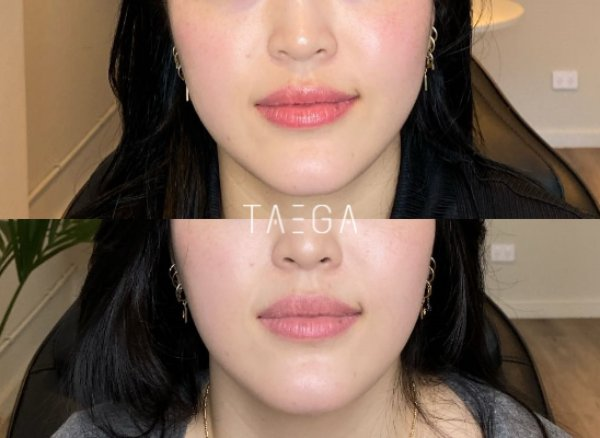
Chin and under-chin profile before HIFU and at follow-up
Brow and eye area
HIFU may support a firmer-looking appearance around the brow or upper-eyelid area in selected cases. An HIFU brow lift before and after comparison may show a subtle change in brow position or upper-eye firmness when mild laxity is present.
The skin around the eyes is naturally thin, so small changes may become noticeable over time. However, fine lines, volume loss, pigmentation, puffiness and brow position can also affect this area, and improvement in one concern may not change another.
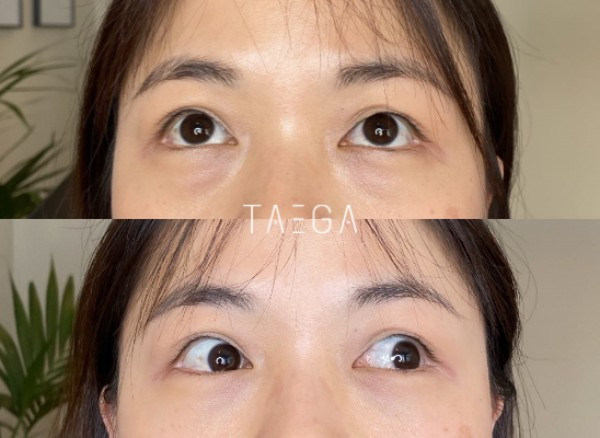
HIFU before and after comparison of the brow and eye area
Neck laxity
HIFU may make mild neck laxity appear firmer and create a smoother transition between the jawline and neck. The degree of change depends on the starting level of laxity, individual skin quality and natural ageing.
The appearance of the neck can also be influenced by muscle activity, tissue distribution and facial anatomy. Results may therefore be more limited when these factors, rather than mild skin laxity, are the main contributors.
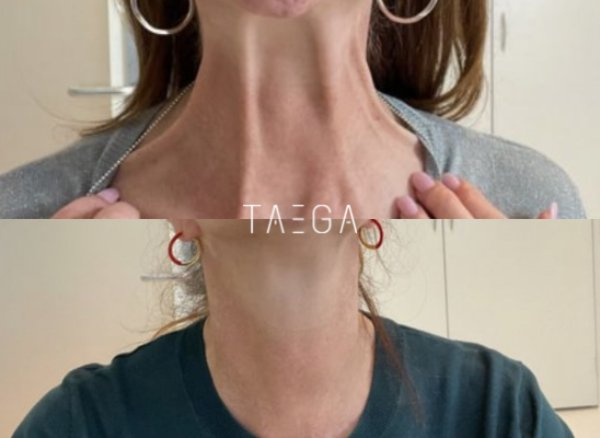
Neck laxity before HIFU and at the planned follow-up
How Long May the Effects Last?
Visible HIFU results around the face or neck may remain noticeable for around 6 to 12 months, although there is no fixed duration for every person or treatment. The skin continues to age, so the effects may gradually become less noticeable over time.
How long the result lasts depends on baseline laxity, skin quality, the treatment area and plan, individual tissue response and ongoing skin ageing. A follow-up assessment is more useful than assuming that everyone will need the same maintenance schedule.
Why Outcomes Vary Between Individuals?
HIFU outcomes vary because each person has a different starting point. Skin laxity, skin thickness, facial anatomy, tissue support and collagen response can all affect how noticeable a change may be. The same treatment area can therefore look different before and after treatment in different people.
Starting level of skin laxity
Mild to moderate laxity may be assessed differently from more advanced sagging or excess skin. When there is significant laxity, the visible change from a non-surgical treatment may be more limited.
The amount of change someone wants is also relevant. A person seeking a subtle improvement in firmness may have different expectations from someone seeking substantial lifting or tissue repositioning.
Facial structure and tissue distribution
A softer jawline, fuller lower face or less defined neck can relate to several factors. These may include skin laxity, localised fullness, facial proportions, bone structure or tissue heaviness.
Two people with a similar-looking concern may therefore need different treatment discussions. The visible appearance does not always reveal the same underlying cause.
Skin quality and individual response
Skin thickness, elasticity and collagen response are not the same for everyone. Even when two people receive treatment in the same area, the timing and visibility of change may differ.
Previous treatments, sun exposure and the existing condition of the skin may also influence how the area appears during follow-up.
Treatment area and treatment plan
The cheeks, lower face, jawline, chin, neck and eye area each have different characteristics. A treatment approach that may be considered for one area may not be relevant to another.
The selected area, treatment depth and overall plan should reflect the concern being assessed. Treating a location without understanding the cause of the concern may not produce the expected change.
Ongoing skin ageing
Skin continues to change over time. Sun exposure, smoking, general health, stress, sleep and natural ageing may all influence how the skin appears over the longer term.
HIFU does not stop the ageing process. A result should therefore be understood as a change observed during a particular period, rather than a permanent alteration to the skin.
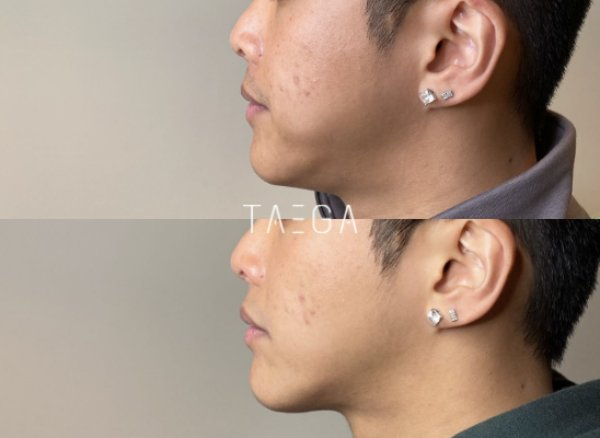
HIFU does not stop the natural skin ageing process
What to Look for in HIFU Before-and-After Photos?
HIFU before-and-after photos are easier to assess when the images are taken under comparable conditions. Small differences in lighting, angle, posture or timing can affect how the result appears.
- Similar lighting: Brightness and shadows should be consistent across both images.
- Matching camera angle: The face, jawline and neck should be photographed from the same position.
- Consistent facial expression: Smiling, tightening the jaw or raising the brows can change facial contours.
- Similar head and neck posture: Tilting or extending the neck may make the jawline appear more defined.
- Clear follow-up timing: The caption should state when the after photo was taken.
- Treatment details: Where possible, include the treated area and number of sessions.
- No filters or retouching: Images should not be altered in a way that exaggerates the change.
- Individual context: One person’s result should not be used to predict another person’s outcome.
What HIFU May Not Change?
HIFU is mainly considered for selected concerns involving mild to moderate skin laxity. It may be less relevant when the appearance is caused by excess skin, volume loss, localised fullness or structural factors.
- Significant sagging or excess skin: HIFU does not replace surgery when substantial tissue repositioning or skin removal is required.
- Volume loss or deep folds: HIFU does not restore lost facial volume and may have limited effect when volume loss is the main concern.
- Structural facial features: Bone structure, facial proportions and tissue distribution are not changed by HIFU.
- Every chin, neck or jawline concern: A softer contour may relate to laxity, muscle activity, posture or anatomy, so HIFU is not suitable for every concern in these areas.
- Under-chin fat in every person: HIFU should not be assumed to reduce localised fat, as under-chin fullness and skin laxity are different concerns.
Common Questions About HIFU Before and After
Why do I not see a major change immediately after HIFU?
Major changes are not usually expected immediately after HIFU. Temporary tightness may occur soon after treatment, while any later improvement in firmness or contour may become easier to assess over the following weeks and months. Timing varies according to the treated area, baseline skin condition and individual response.
Does HIFU reduce fat under the chin?
A softer chin or neck contour can have different causes, including skin laxity, localised fullness, posture and facial anatomy. It is not appropriate to assume that HIFU will reduce fat under the chin for every person. The cause of the concern needs to be considered before treatment options are discussed.
Is one HIFU session always enough?
The number of sessions discussed can vary according to the concern, treatment area, baseline skin condition and individual response. A suitable treatment plan cannot be determined from a single before-and-after image alone. Follow-up is also important because the visible outcome may take time to develop.
Can HIFU replace a facelift?
HIFU does not replace a surgical facelift where someone is seeking substantial tissue repositioning or excess-skin removal. It may be considered for selected concerns involving mild to moderate laxity, but the expected degree of change is different from surgery.
Can outcomes differ between the two sides of the face?
Outcomes may vary between the two sides of the face. Natural facial asymmetry, along with differences in skin quality, muscle activity, and underlying bone structure, can influence how each side responds to treatment.
HIFU before and after changes are usually gradual, with firmer-looking skin or modest improvement around the lower face, jawline, brow or neck when mild laxity is involved. The images shown are general examples only and do not predict individual outcomes. TAEGA can assess your concern and explain whether HIFU or another treatment option may be appropriate for you.