
Sculptra vs Ultherapy: Which Is Best for Your Anti-Aging Goals?
Sculptra vs Ultherapy helps you understand the key differences between collagen stimulation and ultrasound skin lifting treatments. This comparison highlights results, longevity, recovery time, and ideal candidates for each option. This guide helps you choose the right treatment based on your skin goals and budget!
An overview of the Sculptra vs Ultherapy treatment
This is a popular comparison for people choosing between collagen-boosting injections and non-invasive skin lifting technology. This overview explains how each treatment works, who it suits best, and what results you can realistically expect with Sculptra vs Ultherapy.
Sculptra
Sculptra® is a collagen-stimulating injectable treatment designed to help the skin produce more collagen rather than simply filling in lines. Its main ingredient, poly-L-lactic acid (PLLA), is a biocompatible and biodegradable compound also used in dissolvable stitches to support skin regeneration. When injected beneath the skin, it gradually restores thickness, volume, and facial contours with natural-looking improvement over time.
Sculptra vs Ultherapy results typically become noticeable after a few months and improve progressively with a recommended course of sessions. Because the treatment stimulates the body’s own collagen production, the effects can last for up to two years. This long-term regeneration continues to enhance skin texture, firmness, and volume even after the treatment plan is completed.
Ultherapy
Ultherapy® is one of the most trusted non-invasive skin tightening procedures, using focused ultrasound energy to lift, firm, and tone the skin. Unlike injectable treatments, it stimulates collagen production in the deeper structural layers without affecting the skin’s surface. Approved by Health Canada and used globally since 2009, it remains a popular choice for lifting the brows, jowls, and neck, especially for those comparing Sculptra vs Ultherapy.
The ultrasound energy is delivered at precise depths and controlled temperatures to activate collagen regeneration in the foundational tissue layers. This targeted approach helps gradually improve skin firmness and elasticity over time. As a result, patients can achieve subtle, natural-looking lifting without surgery or recovery downtime.
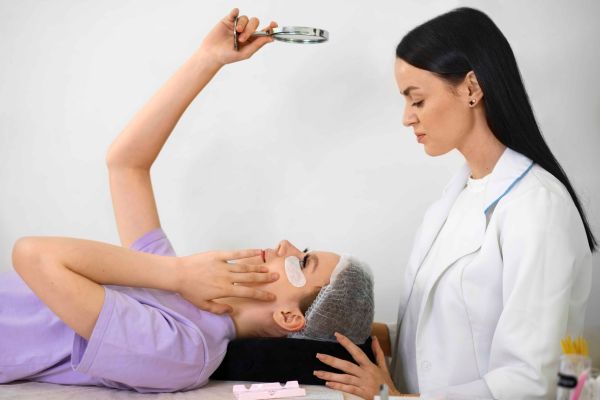
A clear introduction to two popular aesthetic treatment approaches
Understanding the treatment journey: Sculptra and Ultherapy compared
This section explains how each treatment is performed, how long sessions take, and what patients usually experience. It highlights key differences in procedure steps, recovery, and expected timelines for visible results.
Aspect | Sculptra Treatment Process | Ultherapy Treatment Process |
Typical session length | About 30 minutes per session | Up to 2 – 3 hours, depending on area |
Number of sessions | Usually 2 – 3 sessions | Usually 1 session, with yearly follow-up |
Treatment interval | Spaced 3 – 5 months apart | Follow-up recommended every 12 months |
Main technique | Injectable poly-L-lactic acid (PLLA) | Focused ultrasound energy |
Key treatment areas | Cheeks, temples, preauricular area | Face, neck, décolletage |
Sensation during treatment | Mild discomfort, numbing cream optional | Mild heat or tapping sensation |
Downtime | Minimal, normal activities immediately | Minimal, normal activities same day |
When results appear | About 3 – 4 months | About 2 – 3 months |
Result development | Improves gradually as collagen builds | Continues improving for up to 6 months |
Choosing between these two procedures depends on whether your main goal is restoring lost volume or tightening loose skin. When comparing Sculptra vs Ultherapy, the most important difference is that one focuses on collagen-driven volume restoration, while the other targets skin lifting and firmness. Understanding how each treatment process works helps set realistic expectations for results, comfort, and long-term maintenance.
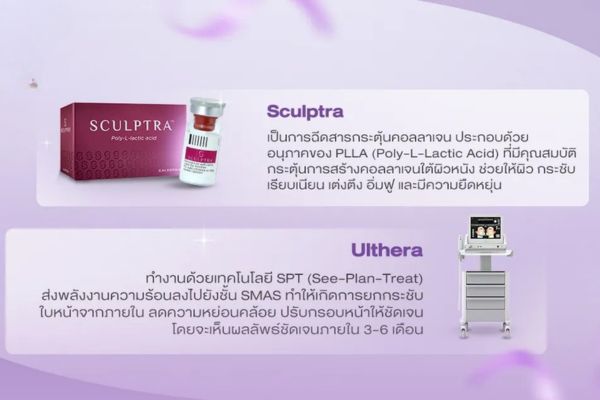
The full treatment process and realistic timeline expectations explained
In-depth comparison of the main benefits of Sculptra and Ultherapy
Sculptra vs Ultherapy highlights two popular non-surgical treatments designed to improve skin quality and facial appearance in different ways. This section focuses on the key strengths of each option to help patients understand which approach better matches their goals.
Sculptra
Sculptra® is a non-surgical rejuvenation treatment that restores facial volume by stimulating the body’s natural collagen production. It is especially suitable for patients who want subtle, progressive improvements rather than instant changes.
- Delivers progressive improvements that look natural and not overdone
- Enhances facial fullness while improving skin density and overall glow
- Helps correct deeper wrinkles, facial folds, and visible volume depletion
- Promotes long-term collagen production for lasting skin improvement
- Creates soft, refined changes without an obvious “done” appearance
- Often a more cost-effective option compared with several other aesthetic procedures
Ultherapy
Ultherapy® is designed to tighten and lift the skin by targeting deeper structural layers without injections or surgery. For patients comparing Sculptra vs Ultherapy, this treatment is often chosen when the main concern is skin laxity rather than volume loss.
- Boosts the skin’s natural collagen production to improve firmness and elasticity
- Targets common lifting areas such as the jawline, neck, and brow for better definition
- Requires little to no recovery time, allowing patients to resume normal routines right away
- Delivers progressive tightening that improves overall skin texture and contour over time
- Best suited for early to moderate signs of skin looseness and sagging
- Provides lifting of the brow and jowl areas without needles or injectable products
- Offers a clinically proven, low-risk treatment with very limited side effects

Key strengths and value points for different patient needs
Treatment aftercare: Typical reactions, safety, and recovery experience
This section outlines the possible side effects associated with each treatment and how they usually feel after the procedure. It helps patients understand what reactions are common, what is temporary, and what is considered rare.
Category | Sculptra | Ultherapy |
Overall nature | Injectable treatment with localized reactions mainly at injection points | Non-invasive energy-based treatment with surface and nerve-related sensations |
Typical downtime | Minimal, most patients resume activities the same day | Minimal, normal activities can be resumed immediately |
Common – swelling | Mild swelling around injection areas, usually resolves within a few days | Mild swelling in treated areas, generally settles within hours or a few days |
Common – redness | Temporary redness at injection sites shortly after treatment | Temporary redness that usually fades within a few hours |
Common – bruising or sensitivity | Mild bruising can appear and last several days, especially in bruise-prone skin | Tingling or skin sensitivity, commonly around the jawline and brow |
Rare – lumps or nodules | Small palpable lumps may form if product distribution is uneven and often improve with massage | Not typically reported |
Rare – infection or numbness | Low risk of infection when aftercare is not properly followed | Temporary numbness or tingling may last several days to weeks in rare cases |
Treatment discomfort | Mild needle-related discomfort during injections | Mild heat or discomfort during energy delivery |
Overall, both treatments are considered safe when performed by qualified practitioners. Most side effects associated with Sculptra vs Ultherapy are short-term and usually resolve without the need for special medical intervention. Understanding both common and rare reactions helps patients plan treatment timing and recovery more confidently.
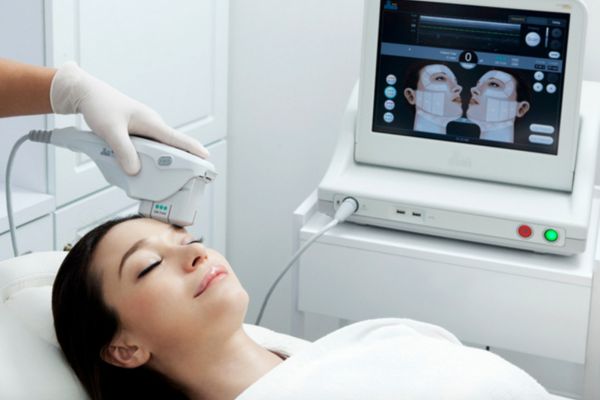
Common reactions, safety notes, and recovery experience overview
Who is best suited for Sculptra and Ultherapy treatments?
This section explains who is most likely to benefit from each treatment based on skin condition and aesthetic goals. It helps readers identify which option matchs their concerns, expectations, and lifestyles.
Sculptra
Sculptra is suitable for people who want to rebuild facial volume and improve skin quality gradually, without surgery. It is especially helpful for those seeking subtle and progressive rejuvenation rather than instant changes when considering Sculptra vs Ultherapy.
- Have visible loss of fullness in the mid-face and want a softer, more balanced facial contour
- Want to improve sunken temples that make the face look tired or older
- Are bothered by deeper folds around the mouth created by underlying volume depletion
- Notice early jowl formation related to loss of structural support in the lower face
- Are adults looking for a non-surgical solution to volume loss linked to aging, medical conditions, or lifestyle factors
Ultherapy
Ultherapy is more appropriate for individuals who want skin lifting and tightening instead of volume replacement. It works best for patients who still have reasonable skin quality and elasticity.
- Are generally healthy and have skin that can respond well to collagen stimulation
- See early to moderate looseness around the eyes, jawline, or neck
- Feel that mild sagging is starting to affect facial definition and contours
- Understand that visible improvements appear progressively over several months
- Prefer a lifting and firming treatment without surgery, needles, or recovery time
Choosing the right treatment depends on whether volume loss or skin laxity is the main concern. Patients with hollowing and facial flattening usually benefit more from collagen-stimulating injectables, while those with drooping skin often respond better to energy-based tightening. A professional consultation is the best way to confirm suitability and design a treatment plan based on individual goals.

Ideal candidate profiles based on skin concerns and goals
Common pitfalls in choosing Sculptra versus Ultherapy treatments
When choosing between Sculptra and Ultherapy, many patients focus mainly on technology or price rather than their actual facial ageing pattern. Understanding the most common decision errors helps prevent unsatisfactory outcomes and unrealistic expectations.
- Many patients choose Ultherapy even when the main problem is facial volume loss rather than skin laxity, which leads to limited improvement in overall contour and fullness.
- Some patients expect strong lifting results from non-surgical treatments despite having advanced skin sagging and heavy tissue descent that usually require more comprehensive approaches.
- Patients and providers sometimes fail to fully evaluate the underlying facial structure, including bone support and fat distribution, before selecting the most suitable treatment plan.
In summary, choosing the right procedure should always start with an accurate assessment of volume loss, skin quality, and facial structure. A personalised evaluation helps match each treatment to the true cause of facial ageing rather than surface symptoms alone. This approach improves both aesthetic outcomes and long-term patient satisfaction.
Combining Sculptra and Ultherapy for better facial results
In clinical practice, practitioners often recommend combining volume restoration and skin tightening strategies for patients who show both mid-face hollowing and early skin laxity. Using both procedures together allows clinicians to treat facial volume depletion and skin laxity at the same time for more balanced rejuvenation. One approach focuses on restoring lost structural support, while the other improves lifting and firmness in deeper skin layers. This combined strategy is often referred to as Sculptra vs Ultherapy.
To achieve the best outcome, the two treatments are usually scheduled separately so the skin can properly respond to each technique. The ideal treatment sequence and spacing depend on facial anatomy, skin condition, and personal aesthetic goals when considering Ultherapy after Sculptra. A qualified provider can design a customised plan to ensure safety, comfort, and optimal long-term results.
Because both procedures rely on natural collagen stimulation, visible changes develop gradually rather than immediately. Volume restoration and skin tightening continue to improve over several months after each session. Allowing enough time between treatments helps maximise collagen response and overall facial improvement.
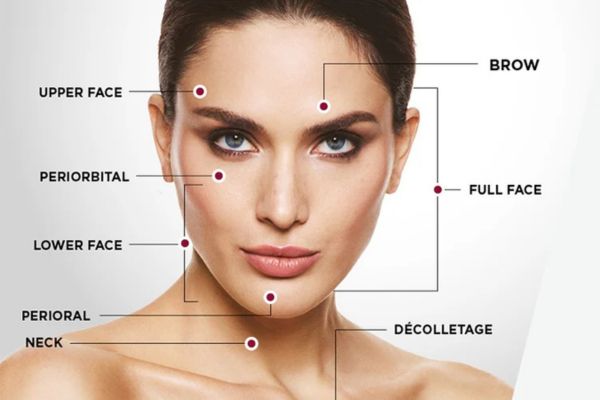
A combined approach for balanced facial rejuvenation outcomes
Which treatment should you choose between Sculptra vs Ultherapy?
People who see hollow cheeks, sunken temples, or a general loss of facial fullness usually benefit more from treatments that rebuild volume and support the face from within. This approach is better for those seeking improved structure and softer, fuller contours rather than surface tightening alone when choosing between Sculptra or Ultherapy. It also suits patients who are comfortable with gradual changes and a treatment plan that may include more than one session.
For individuals mainly concerned about loose skin along the jawline, neck, or jowls, a lifting and tightening solution is often the more appropriate choice. It works best for patients who still have relatively good facial volume and want a non-invasive option with little to no downtime. This distinction is commonly considered when patients evaluate Sculptra vs Ultherapy.
When both volume loss and skin sagging are present, combining treatments can create a more harmonious and natural-looking outcome. Many providers suggest restoring volume first, followed by a skin-tightening procedure to improve lift and definition. This tailored approach allows each method to target a different layer of facial ageing more effectively.
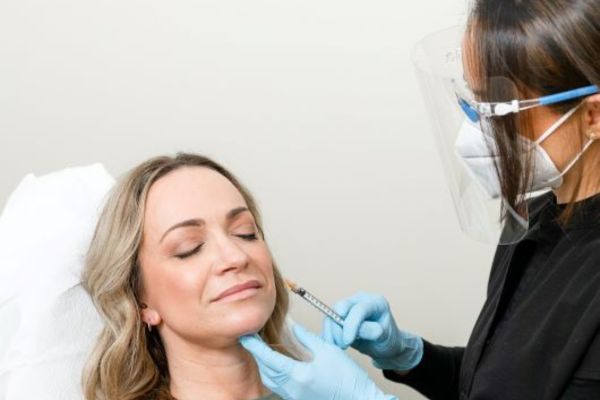
The right option depends on priorities and facial conditions
FAQs about the Sculptra vs Ultherapy in detail
This section answers the most common questions people have when choosing between collagen-stimulating and skin-tightening treatments. It explains differences in results, timelines, safety, and how each option fits different skin concerns.
Which option provides longer-lasting facial benefits?
When comparing Sculptra vs Ultherapy, the best option depends on whether your main concern is volume loss or skin laxity. One treatment focuses on rebuilding collagen to restore facial fullness, while the other targets deeper tissue layers to lift and firm the skin. A professional consultation is important to evaluate your facial structure, skin quality, and long-term aesthetic goals.
Can these procedures be scheduled together in a single plan?
Many patients can benefit from using both procedures as part of a structured rejuvenation plan when considering Ultherapy and Sculptra together. Volume restoration and skin tightening address different layers of facial ageing, so combining them may produce more balanced and natural-looking results. However, treatment timing and sequence should always be planned by a qualified provider to ensure safety and optimal outcomes.
When do most people begin to notice results?
Results usually develop gradually rather than appearing immediately, as collagen stimulation takes time. Visible changes often begin within a few months and continue to improve as the skin responds. This slow progression helps the face look naturally refreshed rather than suddenly altered with Sculptra vs Ultherapy.
Can normal activities be resumed right away?
Both treatments are considered low-downtime options and allow most patients to return to daily activities on the same day. Mild redness, swelling, or tenderness may occur, but these effects are usually temporary. Most people find that recovery does not significantly interfere with work or social plans.
In what cases should treatment be delayed?
In the context of Sculptra vs Ultherapy, people with active skin infections, certain medical conditions, or unrealistic expectations may need to postpone treatment. A detailed medical assessment is essential before proceeding to reduce risks and confirm suitability. Your provider will review your health history and skin condition to decide whether treatment should be delayed or adjusted.
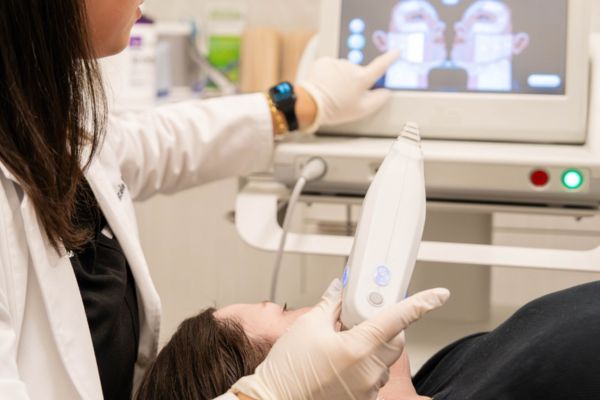
Clear answers to common questions about results and treatment planning
Conclusion
Sculptra vs Ultherapy offers two effective non-surgical solutions for facial rejuvenation, each targeting different signs of ageing and skin concerns. The right choice depends on whether your priority is restoring lost volume or improving skin firmness and lift. A personalised consultation can help determine the most suitable treatment plan for your goals and long-term results.