
What Are Skin Booster Injections And Are They Right For You?
Skin booster injections are microinjection treatments designed to support skin hydration, firmness and overall skin quality. They do not aim to reshape your face or add obvious volume. At TAEGA in Melbourne, we assess your skin, goals and comfort level first, then explain whether a skin booster treatment may suit you.
What are skin booster injection treatments used for?
Skin booster injections are injectable treatments that work within the skin to improve hydration, texture and skin quality. They are usually placed through microinjections into the dermis, where active ingredients can support moisture balance, collagen activity and gradual skin renewal.
The exact formula depends on the product used. Some skin boosters use hyaluronic acid, which attracts and binds water. Others use polynucleotides, amino acids, growth factors or exosome-based ingredients to support repair signalling and skin rejuvenation.
The goal is subtle skin improvement, not a change in facial structure. You may notice smoother texture, a fresher appearance and a more hydrated look over time. Results vary because skin condition, age, lifestyle and treatment plan all affect response.
In what ways are skin boosters and fillers different?
Dermal fillers and skin boosters are both injectable treatments, but they have different goals. Fillers are usually used to restore volume or shape areas such as the cheeks, lips or jawline. Skin boosters focus on skin quality, hydration and surface texture.
Skin boosters also tend to spread and integrate more diffusely within the skin. Fillers are usually placed more strategically to support contour or structure. Some patients may benefit from both, but the right sequence depends on clinical assessment.
If you are comparing skin quality treatment with volume support, TAEGA can explain how dermal fillers Melbourne options differ from skin booster injections during consultation.
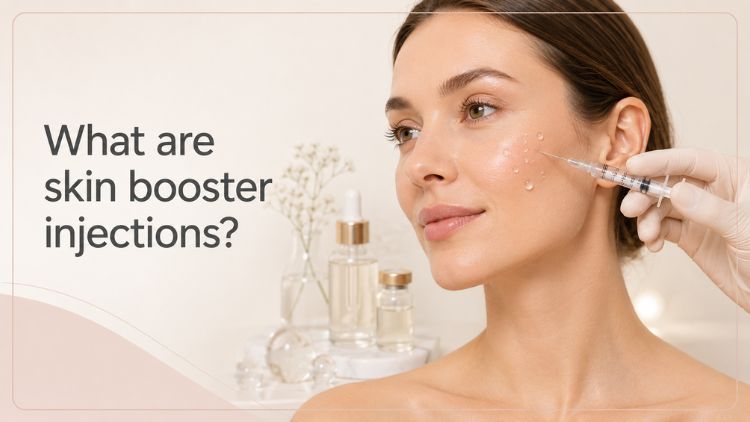
Doctor assessing skin quality before skin booster treatment
Types of skin booster injections available in Melbourne
Different skin goals call for different skin booster formulas. Some products focus mainly on hydration, while others support tissue repair, firmness or collagen stimulation. A consultation helps match the treatment category to your skin concern, treatment area and tolerance for downtime.
Skin booster category | Examples at TAEGA | May suit | Key point |
Hyaluronic acid-based boosters | Profhilo, NCTF 135HA | Dehydrated, dull skin with early signs of laxity | Enhances hydration and skin condition |
Polynucleotide boosters | Rejuran Healer | Texture, repair, under-eye concerns | Regenerative skin support |
Exosome and growth factor-based skin boosters | ASCE+ | Dullness, ageing skin, recovery support | Cell-signalling focused approach |
Amino acid and HA combination | Sunekos | Laxity issues, fine lines, and under-eye skin quality | Supports extracellular matrix structure and quality |
PCL-based boosters | Gouri | Collagen support, longer-term firmness | Biostimulator and skin booster hybrid |
Hyaluronic acid-based skin boosters: Profhilo and NCTF 135HA
Hyaluronic acid, often called HA, helps attract and hold water in the skin. HA-based skin boosters may suit patients who feel their skin looks dry, flat or less elastic.
Profhilo is often described as a bio-remodelling treatment because it spreads under the skin rather than acting like a traditional filler. NCTF 135HA combines HA with more than 50 skin-supporting ingredients, including vitamins, minerals and amino acids.
Polynucleotide boosters: Rejuran healer
Polynucleotide boosters use DNA fragments to support tissue repair and skin renewal. Rejuran Healer is commonly discussed for skin that needs repair-focused support rather than hydration alone.
This category may suit acne-prone skin, uneven texture, post-inflammatory marks or the delicate under-eye area. For a deeper explanation of this category, you can read about Rejuran Healer treatment.
Exosome and growth factor boosters: ASCE+
Exosome-based boosters use cell-signalling components to support communication within the skin environment. ASCE+ is positioned as an advanced option for patients concerned with dullness, texture, visible ageing changes or post-procedure recovery support.
This category is different from HA-based boosters because it does not focus only on water-binding. It works through a biological signalling approach, so suitability needs careful assessment. Learn more about the ASCE+ exosome skin booster if this category interests you.
Amino acid and HA combination: Sunekos
Sunekos combines hyaluronic acid with amino acids to support the skin’s extracellular matrix. This is the network that helps skin maintain structure, hydration and elasticity.
Sunekos may suit people who want support for fine lines, mild laxity or under-eye skin quality. It is not designed to create obvious volume. The treatment plan depends on your skin thickness, concern and response after each session.
PCL and newer generation boosters: Gouri
Gouri uses polycaprolactone, often shortened to PCL, which is a collagen-stimulating material. It sits between a skin booster and a biostimulator because it supports skin quality while encouraging collagen activity over time.
This option may be considered for people who want longer-term collagen support. It is important to note it is not suitable for all cases. TAEGA will assess your skin, medical history and goals before recommending this type of treatment.
Skin boosters under eye: What needs special care?
Skin boosters under eye require careful assessment because the skin in this area is thin, mobile and more prone to swelling or bruising. The most suitable option depends on whether your concern is fine lines, hollowness, pigmentation, vascular shadowing or skin thinning.
Under-eye concerns often have more than one cause. Dark circles may come from pigmentation, visible blood vessels, hollowing or shadowing from volume changes. Skin boosters may help when poor skin quality, crepey texture or fine lines are part of the concern.
Rejuran and Sunekos are often discussed for the under-eye area because they focus on repair, collagen support and skin quality. Some low-volume HA-based formulas may also be considered. However, not every skin booster suits the periorbital area.
Results tend to develop slowly over time. Many patients look for subtle changes over 4 – 8 weeks rather than a dramatic immediate difference. If dark circles are your main concern, TAEGA can also assess whether a broader treatment for dark circles under eyes may be more appropriate.
If you are unsure whether your under-eye concern comes from skin quality, pigmentation or volume change, book a consultation with TAEGA. We can assess the area and explain which options may suit you.
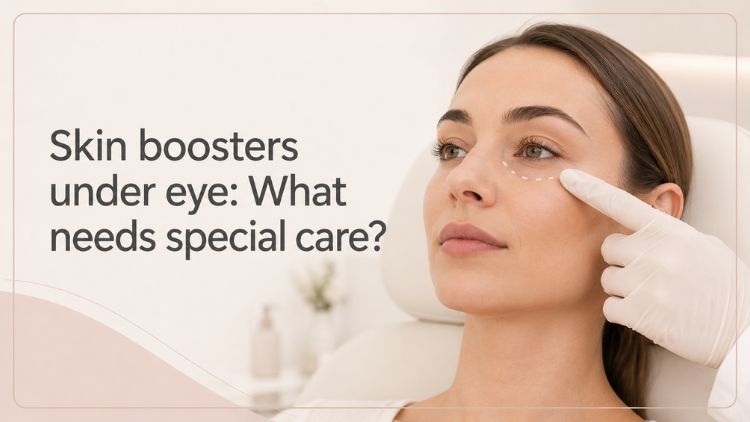
Under-eye skin booster treatment requiring careful clinical assessment
What happens during a skin booster injection treatment?
A skin booster injection treatment usually starts with consultation, then preparation, microinjection and aftercare guidance. Most appointments take about 30–45 minutes, although timing can vary based on treatment area, product choice and whether numbing cream is used.
A typical skin booster treatment may include these steps:
- Skin assessment: We assess your skin quality, concern, medical history and treatment area.
- Product selection: We explain which booster type may suit your goals and why.
- Comfort preparation: Topical numbing cream may be applied for around 20–30 minutes.
- Injection delivery: Fine needles, cannula or an injector device may place product into the skin.
- Aftercare guidance: We explain what to expect and what to avoid after treatment.
Treatment areas can include the face, neck, décolletage and under-eyes. Some patients may be treated manually, while others may suit device-assisted delivery. TAEGA may use the Dermashine Pro injector when precise, even microdelivery is appropriate.
You should not expect a major change immediately after treatment. Mild redness, small bumps or tenderness can appear after injection. Results usually develop over 2–4 weeks as the ingredient integrates and the skin responds.

Step-by-step skin booster injection procedure in clinic
What to expect from skin booster side effects
Skin booster side effects are usually temporary, but they should still be discussed before treatment. Common effects include redness, swelling, tenderness, small injection bumps and bruising. Less common risks include infection, nodules or uneven product placement.
Short-term responses after treatment may include:
- Redness at injection points for several hours
- Minor swelling in treated regions
- Small papules that flatten within 1–3 days
- Bruising, especially near the under-eye area
- Tenderness for around 24–48 hours
Less common risks can include a bluish tint if HA is placed too superficially, small nodules or infection. These are uncommon, but they are part of the risk discussion for any injectable treatment.
You can reduce risk by choosing a qualified injector and following aftercare. Avoid makeup, heat, sun exposure and strenuous exercise for the first 24 hours unless your clinician gives different advice. Tell TAEGA about blood thinners, cold sore history, allergies or active skin conditions before treatment.
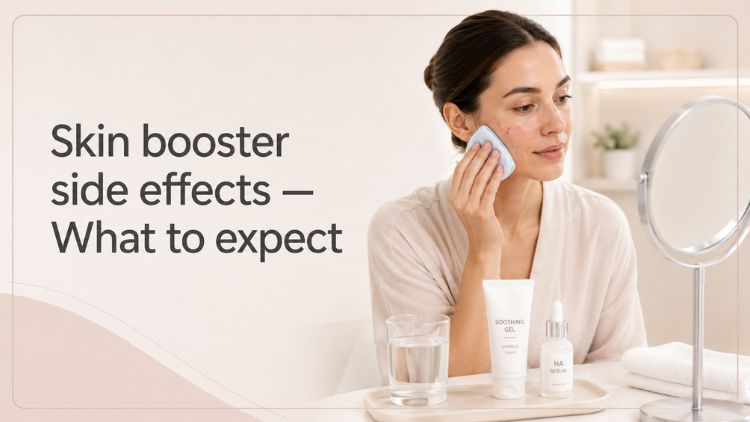
Common side effects after skin booster injection treatment
How long do skin booster treatments remain effective?
How long skin boosters last depends on the product type, skin condition, treatment course and lifestyle. Many skin booster plans involve 2–3 initial sessions, followed by maintenance every few months or as advised during consultation.
Skin booster type | Typical duration guide | Notes |
HA-based boosters | 3–6 months | Hydration-focused support |
Polynucleotide / Rejuran | 4–6 months | Supports repair-focused skin quality improvement |
Exosome / ASCE+ | 6–12 months | Outcomes differ by skin type and condition |
Sunekos | 3–4 months | Often planned as a course |
Gouri / PCL-based | Up to 24 months | Gradual collagen support builds over time |
Timelines are indicative, not fixed outcomes. Sun exposure, smoking, hydration, sleep, skincare routine and metabolic rate can affect how long your result appears to last.
Results are also cumulative. Your first session may improve hydration and texture, while a planned course may provide more noticeable change. TAEGA will explain whether maintenance is appropriate for your skin and goals.
Skin boosters Melbourne: Who is a good candidate?
Skin boosters in Melbourne may suit adults who want to improve skin quality without changing facial structure. They are often considered for dullness, dehydration, fine lines, early laxity, uneven texture or skin that feels less firm than before.
You may be considered suitable if you are seeking:
- Fresher-looking skin without obvious volume change
- Support for dry, crepey or tired-looking skin
- Slow improvement in skin texture and hydration
- Personalised plan based on skin and comfort
- Natural results over noticeable transformation
Skin booster injections can suit a wide age range. Some people in their 20s and 30s seek hydration and early skin support. Others in their 40s, 50s and 60s may want firmer, smoother-looking skin quality as collagen and elasticity change.
Treatment may not be suitable if you are pregnant, breastfeeding, have an active skin infection, have certain autoimmune conditions or recently had another procedure in the same area. We will assess these factors before recommending treatment.

Patients consulting doctor for skin booster suitability assessment
FAQs on skin booster treatments
Here are some common questions about skin booster treatments and what to expect:
Can skin booster treatments be used with others?
Yes, skin boosters can sometimes be combined with wrinkle-relaxing or volume-restoring treatments because they work on different concerns. Skin boosters focus on skin quality, while other injectables may target movement lines or facial volume. A qualified clinician should sequence treatments carefully to reduce irritation, swelling or unnecessary overlap.
How many treatments are needed before results are visible?
Most skin booster protocols involve an initial course of 2–3 sessions spaced around 3 – 6 weeks apart. Some early changes may appear within a few weeks, but full benefit often becomes clearer after the planned course. Your skin condition, product choice and treatment area affect timing.
How painful are skin booster injections?
Most patients describe skin booster injections as tolerable rather than painful. Topical numbing cream may be applied beforehand, and fine needles are used for microinjections. The sensation can feel like small pinches. The under-eye area can be more sensitive, so comfort planning matters.
Are skin boosters suitable for sensitive or reactive skin?
Some skin booster formulas may suit sensitive or reactive skin, but suitability depends on your history and current skin condition. Repair-focused options may be considered when the skin barrier feels compromised. TAEGA will assess active irritation, allergies, medications and recent procedures before recommending treatment.
Is skin booster treatment suitable for male patients?
Yes, men can consider skin booster injections for hydration, skin texture, pore appearance and tired-looking skin. The treatment goal is still natural-looking skin quality, not facial reshaping. Product choice may vary because male skin can be thicker and treatment goals may differ.
How do skin boosters differ from mesotherapy?
Mesotherapy is a broad technique that uses microinjections of customised ingredients into the skin. Skin boosters are more specific and focus on skin quality through ingredients such as HA, polynucleotides, exosomes or collagen-supporting formulas. Some treatments, such as NCTF 135HA, can sit between both categories.
Choosing the right skin booster treatment at TAEGA
The right skin booster treatment depends on your skin concern, treatment area, tolerance for downtime and the type of improvement you want. Hydration, repair, under-eye quality and collagen support may each require a different formula or treatment course.