
Q-Switch Laser vs Pico Laser: Which is better?
Both Q-Switch laser vs Pico laser are well-known in advanced skin treatments, from pigmentation problems to tattoo removal. It is quite challenging to make a decision as to which one is better for your specific needs. Key differences between Q-Switch and Pico laser technologies are discussed herein, together with a review of effectiveness, treatment options, and the general benefits that come with their applications. Whether one is looking to achieve skin rejuvenation, get rid of unwanted tattoos, or simply treat pigmentation problems, the different strengths of each laser will enable them to make informed decisions.
Understanding Q-Switch Laser and Pico Laser
While both technologies use laser energy to target and treat problem areas, they differ not only in their methodologies, but also pulse duration, and overall results. Being educated on the key differences between Q-Switch and Pico lasers will help you choose the right treatment for what your skin needs.
What is Q-Switch Laser?
Q-Switch laser produces short, high-intensity pulses that target selected pigment in the skin or tattoo ink. It may be considered for concerns such as freckles, sunspots, some birthmarks and other forms of pigmentation. For a location-specific example, TAEGA’s guide to Q-Switch laser treatment for underarm pigmentation explains how dark underarms may be assessed and what can affect treatment suitability.

What is a Pico/Switch laser?
What is Pico Laser?
This Pico laser works by delivering very short bursts of energy onto specific problem areas, without building up heat. In fact, such powerful impact shatters the unwanted skin pigment or particles that are then cleared away naturally by the body’s own processes.
Pico laser technology is an advanced, non-invasive, and non-surgical treatment to address common skin concerns, which range from sun damage to acne scarring. It is a superior laser treatment to imperfections, hence it encourages clearer, healthy-looking skin.
Pico laser technology successfully works on the treatments of pigmented lesions, as well as tattoos-on colors that are removable-along with the stimulation of elastin production in the skin, thus helping create smoother, plumper, and more youthful complexions.
Is Picosure Better Than Q Switch?
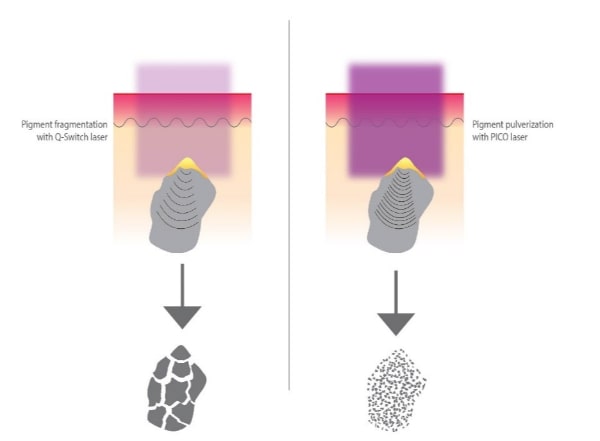
The Q-Switched laser works by targeting the melanin in both the epidermis and dermis through a thermal effect. When activated, it breaks down melanin into larger fragments, which are then absorbed by macrophages. After phagocytosis, there is typically a period of color sedimentation.
In contrast, the picosure laser operates with a shorter pulse width and higher peak power compared to Q-Switched lasers. Its primary impact on the skin is through a photomechanical process. This photomechanical effect disintegrates pigment particles across a wider diameter range. Despite having less total pulse energy than nanosecond lasers, it can still effectively break down pigment particles throughout the treated area.

Q-Switch laser vs Pico laser for pigmentation
Both Q-Switched and picosure lasers are popular laser treatment options, but they differ significantly. One of the main distinctions is their speed—picosure lasers work 20 times faster than traditional Q-Switched lasers, which also results in a lower risk associated with the procedure.
To sum up, both lasers were effective in most cases; however, generally speaking, Pico laser yielded quicker, more precise results with less downtime as compared to most of the treatments, hence becoming one of the go-to treatments for a lot of skin concerns. Nevertheless,Q-Switch lasers remain workable and often much cheaper options for some procedures.
Q-Switch laser vs Pico laser: What are the advantages?
Two of the most popular laser treatments for advanced skin rejuvenation and pigmentation issues are Q-Switch laser vs Pico laser. Both are effective, but they work differently and offer unique advantages. Knowing the pluses of Picosure over Q-Switch will help you decide which therapy is best for you based on the results you want, recovery time, and skin concerns. In order to help you make an informed choice and customize it to meet your needs, we examine each laser’s primary benefits below:
The positive aspects of the Q switch laser
The 1064nm has the best absorption efficiency to the melanin, so it can damage the melanocyte completely.
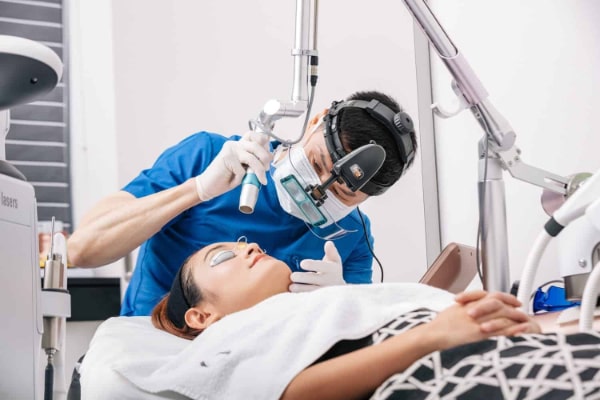
The Q-Switch Laser is used on the skin to treat various pigmented lesions, including age spots, freckles, sunspots, and some birthmarks. Q-Switch Laser works by targeting melanin in the outer layer of the skin. The light energy produced by the laser is absorbed by these pigmented areas, which is further converted into heat energy. This breaks up the pigment while the residual skin surrounding it is left untouched.
Is Picosure better than Q-Switch?
The benefits of Pico Laser
Pico laser treatments are incredibly precise, significantly reducing the risk of unwanted damage. This precision makes Pico a very safe option, suitable for use on any part of the face or body.
Another benefit is that Pico laser requires no downtime. While some may experience mild redness or swelling, it typically fades within a few hours, allowing patients to resume their normal activities right away.
The procedure is also virtually painless. Although you might feel slight, temporary discomfort, it’s far less intense than what you’d experience with surgical or invasive procedures.
Additionally, Pico laser helps patients achieve their goals in fewer sessions compared to other laser treatments, with some noticing desired results after just one session. Pico laser has minimal to no side effects, so there’s little to no risk of skin damage or complications afterward.
Finally, Pico laser sessions are remarkably quick, typically lasting between five and 30 minutes per treatment.
Choosing Between Q-Switch and Pico Laser
The choice between a Q-Switch laser vs Pico laser depends on a few factors: your skin concerns, your desired outcomes, and characteristics of each laser. Here is a breakdown to help you decide:
1. Skin Concerns
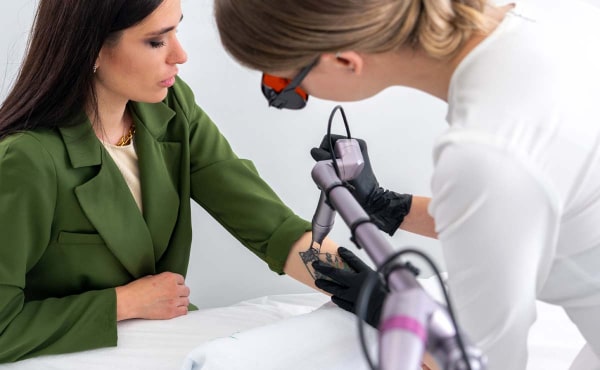
- Q-Switch Laser: Mostly effective for addressing pigmentary issues, such as age spots, freckles, melasma, and tattoo removal. This laser technology has deeper pigmentation and more pronounced thermal effects, which help degrade melanin; people comparing local options can also review tattoo removal in Melbourne.
- Pico Laser: Much better for addressing a wider range of skin concerns, from pigmentation and acne scars to fine lines and skin rejuvenation. In this way, this photomechanical action also targets the smaller pigment particles, which are effective in tattoos with a wider color range.
Pico and Q-Switch laser: which one to choose?
2. Precision and Efficiency
- Q-Switch Laser: It works much slower compared to the Pico laser. More sessions may be needed with Q-Switch technology to deliver the full effect. It is very good, however, for bigger pigment particles.
- Pico Laser: Works much faster, about 20 times faster than Q-Switch, and therefore does a better job of breaking down the pigment particles with fewer sessions. Shorter pulse duration and higher peak power mean quicker results with less damage to surrounding tissue.
3. Side Effects
- Q-Switch Laser: The Q-Switch lasers are thermal in nature, which can provide a greater tendency for post-inflammatory hyperpigmentation among darker skin types. Recovery usually takes longer because of the possibility of thermal damage.
- Pico Laser: Due to the photomechanical effect and narrower width of the pulse, it will generally produce less heat, reducing hyperpigmentation or scarring. It is safer for darker-skinned individuals and has faster recovery periods.
4. Treatment Area
- Q-Switch Laser: This is workable on larger treatment areas or even deeper pigmentation concerns.
- Pico Laser: Better suited for finer treatments, it may be used for more sensitive areas or when a quicker recovery may be needed. It’s also favored for fine lines, wrinkles, and acne scars, along with pigmentation removal.
5. Number of Sessions
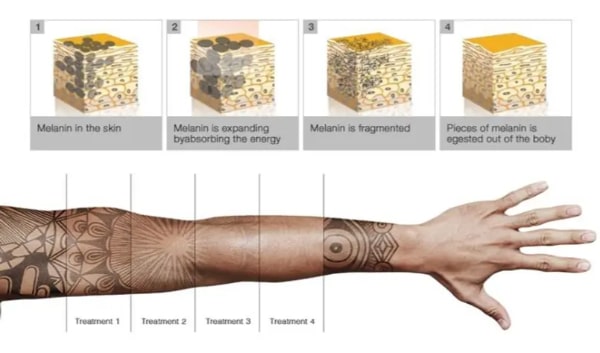
- Q-Switch Laser: Being slower in terms of speed, this laser requires more sessions. The final results are therefore much longer in coming, as in the case of deep pigmentation or tattoo removal.
- Pico Laser: Generally requires fewer sessions because it is much faster and more effective in the disintegration of pigment particles.
The number of laser treatment sessions you need for your individual goals
6. Pain and Comfort
- Q-Switch Laser: Since it uses a thermal approach, it may give more discomfort during the procedure.
- Pico Laser: Much less painful because it is much quicker in action and photomechanical in approach, hence it produces less heat.
7. Cost
- Q-Switch Laser: Generally cheaper per treatment, but since more sessions may be needed, the actual cost would be greater over time.
- Pico Laser: Each session could be costlier, but since few sessions are typically needed, it could work out to be comparatively cheaper in the long run. In Summary: The Q-Switch Laser is usually indicated for deeper pigmentations or larger areas, or when patients have more budget concerns.
You’d better choose Pico Laser in cases when you need quicker results; you have more skin concerns, from acne scars to fine lines. You also have choices in case of less pain during the procedure or if your skin is dark and there’s a possibility of hyperpigmentation. Whatever your preference may be, you are always better off seeing a dermatologist or laser specialist for advice about your skin type and particular problems you might face.
The cost of Q-Switch laser vs Pico laser
Conclusion
Both the Q-Switch laser vs Pico laser are incredibly strong treatments for everything, ranging from pigmentation and tattoo removal to acne scarring and skin rejuvenation. Which one is better really depends on what the individual needs, skin type, and condition being treated. Compared to the Pico laser, the Q-Switch laser is more reliable in the case of deeper pigmentation and larger areas. The Pico laser, in turn, provides greater speed, precision, and less recovery time. Anyway, it would be much better to find out which of the two best suits your needs by contacting a skincare professional who can take a look at your skin and will recommend what’s best for you.