
Differences Between Ablative and Non-Ablative Lasers: Which Is Best for You?
Laser skin resurfacing caters to many different skin rejuvenation needs from wrinkles and saggy skin to scars and hyperpigmentation. This is why there are two major types of this treatment: ablative and non-ablative lasers. So which one should you go for? And what are the biggest differences between ablative and non-ablative laser treatments?
Laser Skin Resurfacing
Laser skin resurfacing treatment uses a thin laser beam to essentially remove the outer layers of your skin, therefore promoting the growth of rejuvenated skin. Generally, it is a minimally invasive treatment that can deliver considerable results. Depending on your condition, your physician or provider will recommend one of the following:
- Ablative laser skin resurfacing: This procedure removes the outer layers of your skin with the laser beam. The idea is to allow the skin to heal, forming new and rejuvenated skin.
- Non-ablative laser skin resurfacing: On the other hand, this one does not create controlled wounds on your skin. Instead, it heats up the inner layers of the skin with a laser beam through thousands of little columns
Both ablative and non-ablative laser skin resurfacing can help to improve the appearance of your skin with a certain amount of downtime after the procedure. On top of that, certain side effects like redness and swelling are to be expected.
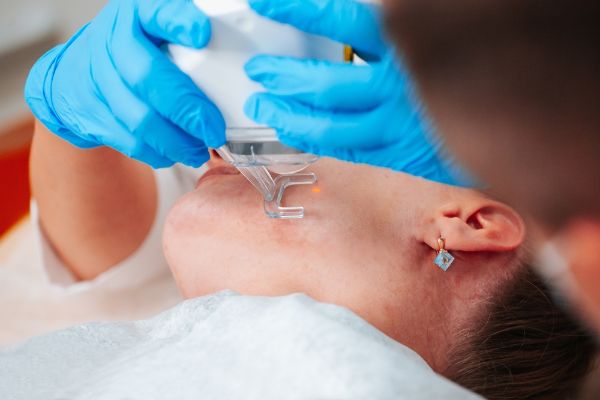
Laser skin resurfacing is a highly effective procedure
Type of Laser Skin Resurfacing
So which group do the most popular laser skin resurfacing treatments belong in?
Ablative Laser Resurfacing
Two commonly discussed ablative resurfacing options are CO2 laser and Erbium YAG. CO2 laser resurfacing removes selected outer skin layers and may be used when deeper resurfacing is appropriate. Erbium YAG laser treatment also resurfaces the outer skin, but its tissue interaction and expected recovery may differ from CO2 laser.
- CO2 laser resurfacing removes the outer layers of your skin with a beam of light, stimulating collagen production and encouraging skin growth. It is by far the most powerful laser method currently available, allowing for deeper penetration.
- Erbium YAG is no different in terms of mechanics, but it is somewhat less aggressive than CO2 laser. This is due to its shorter wavelength, so this method requires less downtime.
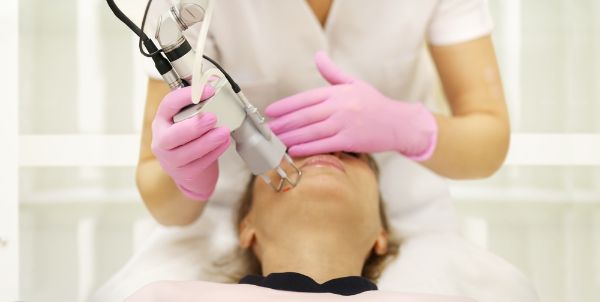
Ablative and non-ablative laser resurfacing are two types of treatments
Non-Ablative Laser Resurfacing
Non-ablative laser resurfacing treatments do not remove any layer of the skin. Instead, it stimulates the natural healing process. These following methods are considered non-ablative laser resurfacing treatments:
- Fractionated lasers: Multiple microbeams will be used to treat certain parts of your skin, not an entire area.
- Intense Pulse Light: This device proves to be highly effective in treating mild skin conditions.
- Pulsed-Dye Lasers: They target blood vessels and make them shrink using heat alone.
- Q-Switched lasers: Using high-energy light in short pulses, this method is one of the most well-known non-ablative laser treatments.
Differences Between Ablative and Non-Ablative Lasers
Mechanism of Action
The biggest difference between these two groups of laser resurfacing methods is how they work.
Ablative lasers, like what the name suggests, remove the outer skin layer and get deeper into the dermis while non-ablative lasers generate heat with the laser beam to affect the area beneath the skin surface. Either way, both stimulate collagen production, albeit non-ablative lasers employ a more gentle method on your skin.
Thanks to the collagen production and the outer layer of skin removed, your skin will take on a smoother and more youthful appearance after the recovery period.
Recovery Time for Laser Treatments
Due to the differences in mechanics, ablative and non-ablative laser resurfacing treatments have differing recovery time. Ablative laser requires 1 to 2 weeks but non-ablative laser only needs 4 to 5 days, a significantly shorter period. Related to that, the side effects of non-ablative laser resurfacing are also milder than ablative treatment.

What are the differences between the two methods?
Results
What ablative laser lacks in recovery time, it makes up for in the final results. Ablative laser produces noticeable and long-lasting results after only one treatment session. Conversely, non-ablative lasers may require extra sessions periodically to achieve your desired outcomes. This is why ablative laser skin resurfacing is the more popular option for those with busy schedules.
Ablative laser skin resurfacing can be used to treat more severe skin problems, such as deep wrinkles and scars. Non-ablative laser skin resurfacing is typically used to treat mild skin problems, such as fine lines and wrinkles.
Ideal Candidates for Non-Ablative Laser and Ablative Laser
The appropriate laser depends on the concern being assessed, the required treatment depth and the recovery window you can manage. Ablative laser resurfacing may be discussed for selected deeper wrinkles, established scars or sun-related texture changes. Non-ablative treatment may be considered for milder tone or texture concerns when less downtime is preferred. If your main concern is active breakouts, excess oil or pore congestion rather than an established scar, a ClearSkin Pro laser assessment for active acne and congested skin may be a more relevant treatment discussion.
- Ablative Laser: Thanks to its more aggressive approach, ablative lasers are more suitable for individuals with severe skin conditions, such as deep wrinkles, scars, or sun damage. On top of that, if you are looking for a one-and-done session, this can also be your pick.
- Non-Ablative Laser: If you are only dealing with milder skin concerns, such as fine lines, wrinkles, or uneven skin tone, non-ablative laser treatment will do. Not only will it require less downtime, the treatment is also less painful.
All in all, your specific needs, schedules, and tolerance will factor into your decision to choose between ablative and non-ablative laser resurfacing treatments. Additionally, make sure to ask for opinions from your physicians as well as your cosmetic service providers before making your choice.
Conclusion
Ablative and non-ablative laser resurfacing treatments are polar opposites, each catering to different skin conditions. After learning about their mechanics, downtimes, and results, you can now make an informed decision on which treatment to choose for effective skin rejuvenation. Either way, laser treatments have proved to be highly effective in bringing back the youthful appearance of your skin, so the most important thing to do is finding safe and trustworthy clinics to undergo these procedures.